Software — Theralon

Terra

The operating system for physical operations.

Terra models an operation as one system — every asset, site, shipment, supplier and route, and the relationships between them — and reasons forward through it continuously. It identifies the failure before it occurs, traces everything it will reach, and determines the intervention that matters now.

Built for operations, supply chain, logistics, maintenance and planning teams, from freight and terminals to cold chain, rail and fuel.

Built around your data, your systems and how you actually operate, at whatever size the operation is.

In the Command center

Watch it work.

Synthetic data
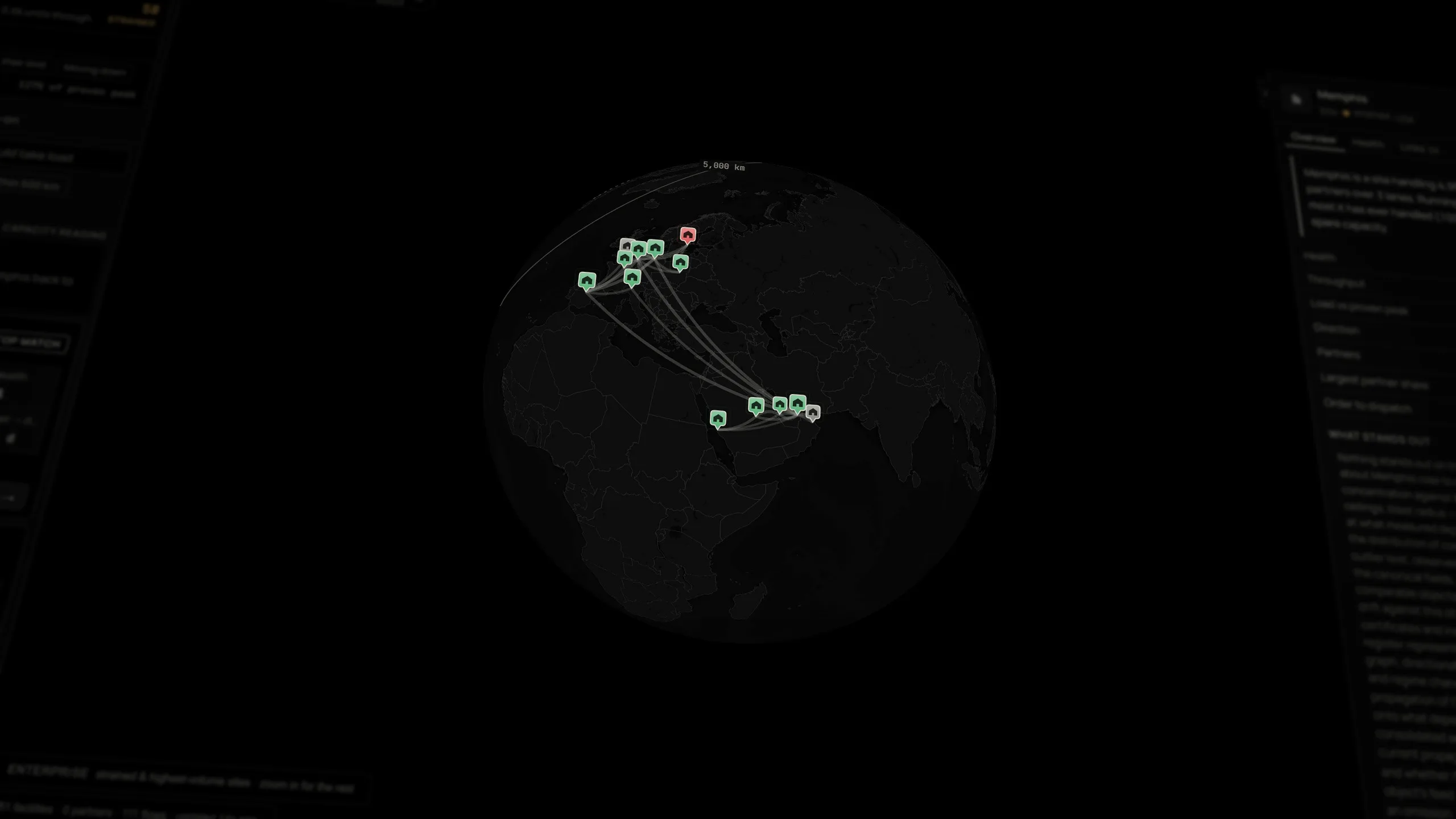
  1. 01 SeeMemphis is running over capacity, and the map shows it in its place in the network.
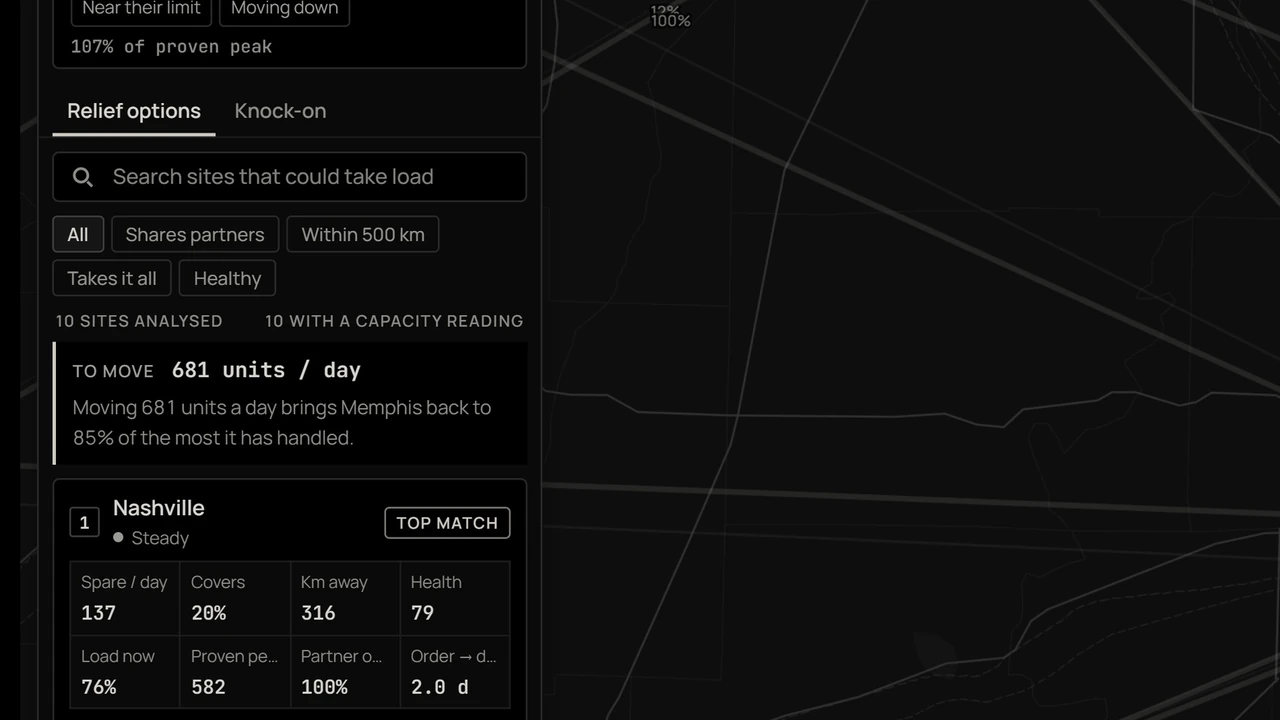
  2. 02 RelieveTerra ranks the sites with room to spare, by distance and spare capacity a day.
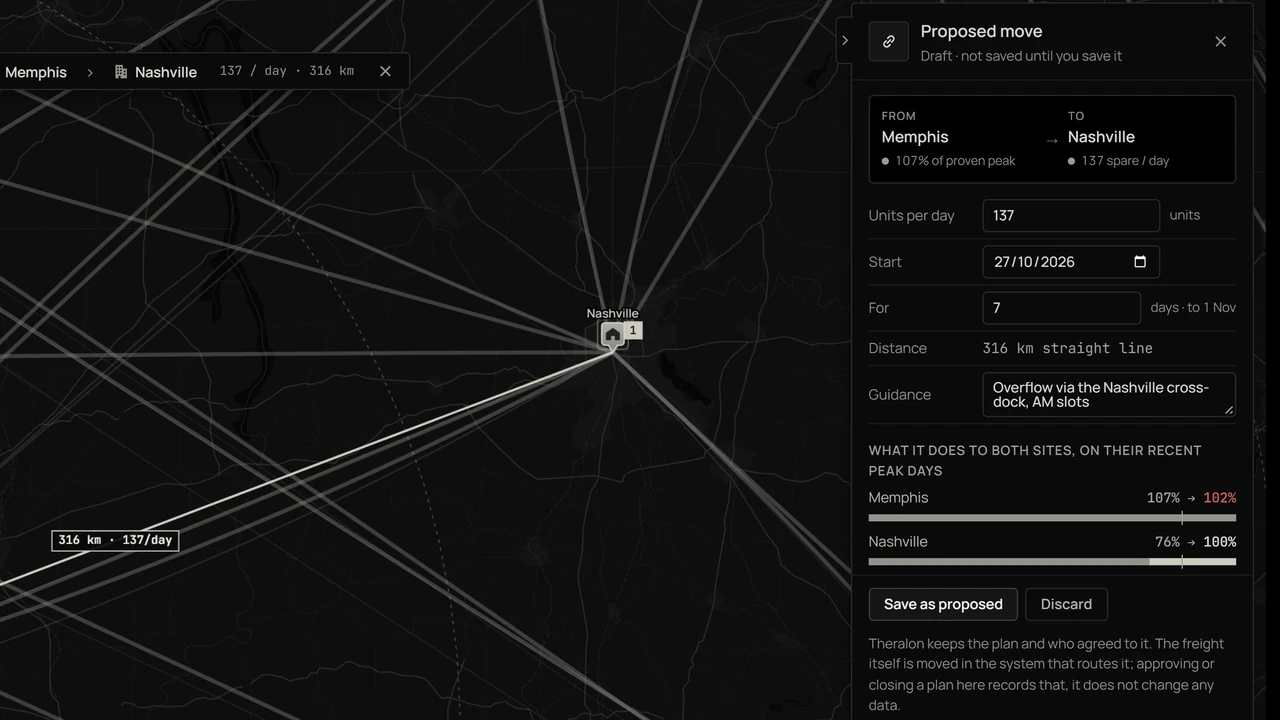
  3. 03 PlanThe move is planned with its volume, duration and handling guidance.
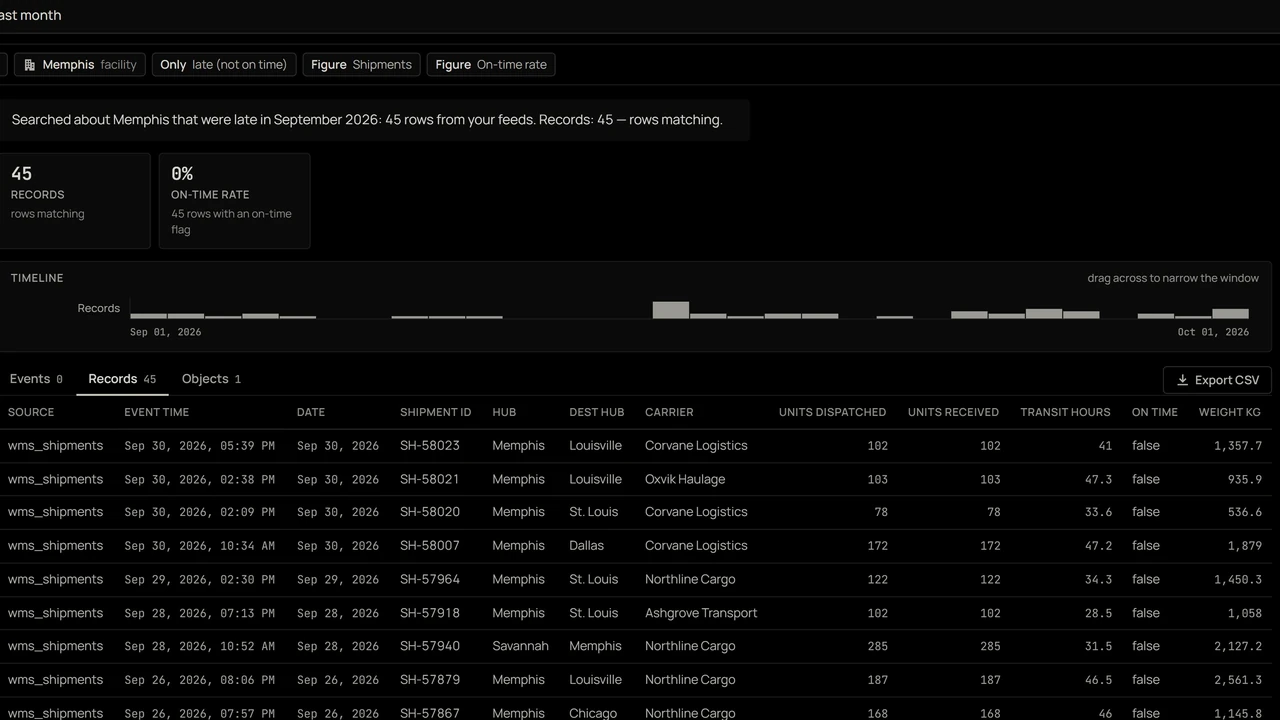
  4. 04 SearchOne question returns the late shipments behind it, record by record.

With Terra

What an operation can do with it.

  1. 01

    See the failure before it occurs.

    The drift, the overload, the late linehaul, while there is still time to act.

  2. 02

    Know everything it will reach.

    Every order, appointment, site and customer downstream, and when it lands.

  3. 03

    Act with the evidence attached.

    Each recommendation with its signals, its predicted impact and a stated confidence.

  4. 04

    Keep every system you run.

    Nothing migrated, nothing replaced. Terra works across what they already produce.

Inside Terra

From the first sign to the move.

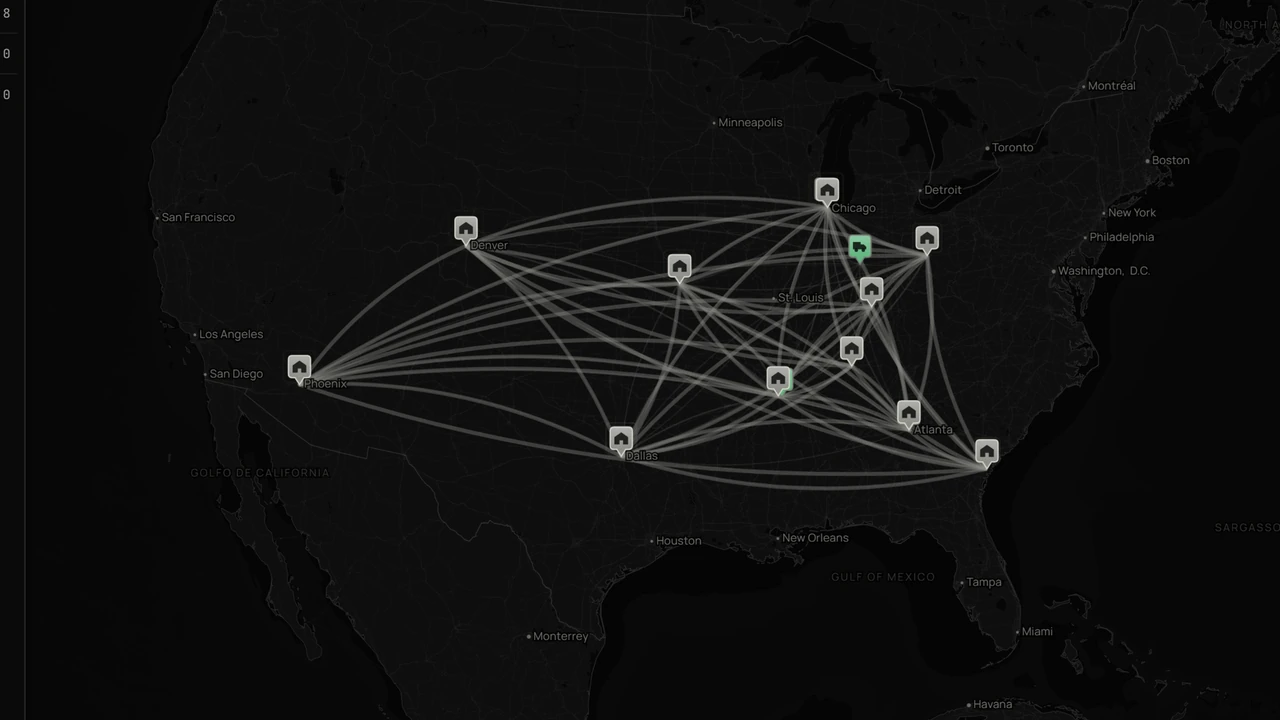
Terra's network map of North America, with sites marked by load.

01 — See

The network as it stands, and what is straining.

Every site, lane, carrier and shipment on one live map, each in its place in the network. Terra marks what is running past its proven limits before it shows up as a missed delivery.

  • Load read against proven capacity, site by site
  • Any past date, as it was recorded
  • Drift caught before any threshold trips
Relief options ranked in Terra, with Nashville as the top match.

02 — Relieve

The room, found before the overflow.

When a site runs over, Terra ranks the places that could take the load: spare capacity a day, distance, health, and whether they lean on the same partners.

  • Every option with its figures
  • Shared dependencies shown, not hidden
  • The top match, and why it is the top match
A planned move in Terra, showing its effect on both sites.

03 — Plan

The move, with its effect shown first.

The move is drafted with its volume, its dates and its handling guidance, and Terra shows what it does to both sites on their recent peak days before anything is saved.

  • Effect previewed on both sites
  • Held as proposed until a person approves it
  • Kept with who agreed to it, and why
Terra search results for late shipments at Memphis, with figures and a daily chart.

04 — Search

One question. The rows behind the answer.

Ask the record in plain words and Terra returns the answer with the records under it: the late shipments, the units, the days from order to dispatch, by day and by row.

  • Plain-language search across every record
  • Every figure opens to the rows behind it
  • The same model every screen runs on
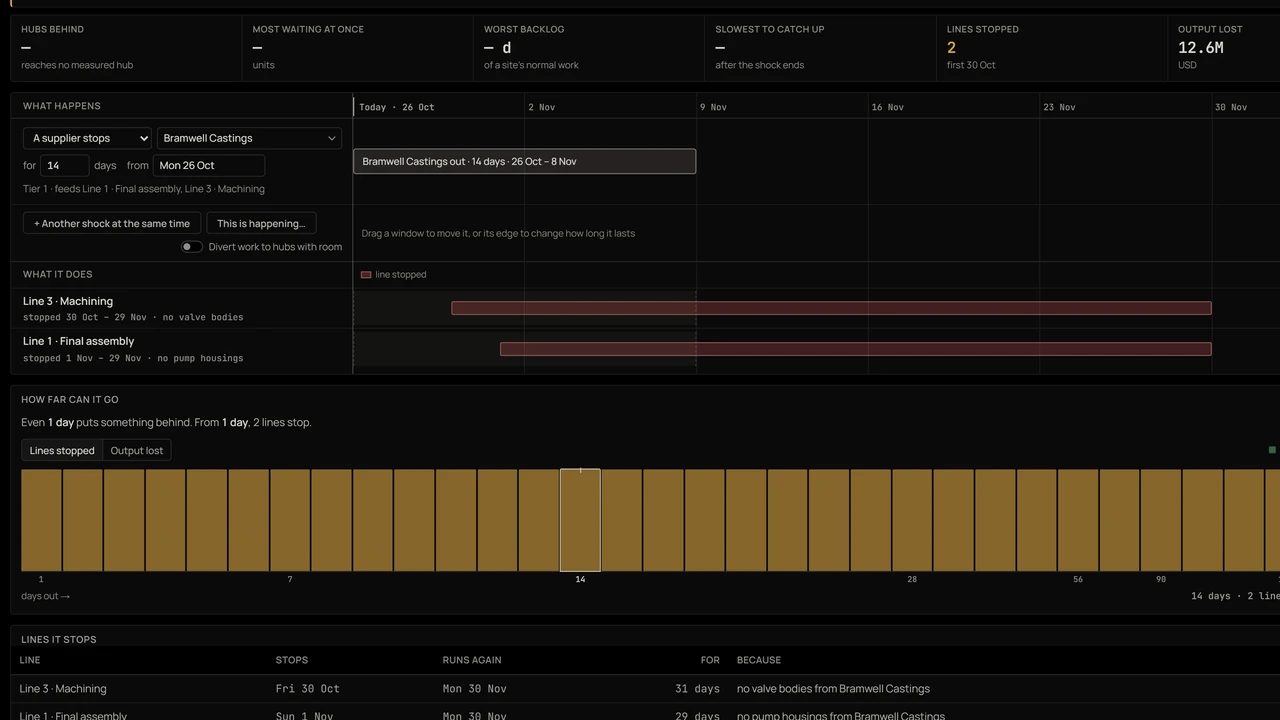
A scenario in Terra: a supplier stopping for two weeks, the two lines it stops and the output lost.

05 — Rehearse

What a stop or a surge does, before it happens.

Name the shock, a supplier stopping, a carrier out, a hub down or a surge in demand, and Terra runs it through the live model: which lines and sites fall behind, from when, for how long, and the output lost, in money wherever its value is on record. It shows what diverting the work would change.

  • Lines and sites stopped, with their dates
  • How long it can last, before anything stops
  • The suppliers that have delivered the same material before

Screens from the product, on synthetic data.

Three questions

What tells you today?

When a load starts running late, does anything tell you which appointments and customers it will hit before the miss?

Terra does. It sees the delay forming and traces every load, appointment and customer it reaches, while there is still time to re-plan.

When an asset starts drifting, does anything tell you before it fails, and which orders and sites it will reach?

Terra does. It reads the slow drift that never trips a threshold and traces it to the work, the sites and the customers behind it.

When your TMS, your WMS and a customer's EDI disagree, does anything tell you which one is right?

Terra does. It reconciles the records into one view of the operation, with the source of each.

How it works

Three steps, running continuously.

  1. 01

    Read

    Terra reads the systems the operation already runs, whatever the sector, and recognises what each one describes: the sites, lines, machines, suppliers, shipments and routes, and how they depend on each other. Every screen then speaks the operation's own words.

  2. 02

    Reason

    It reasons forward continuously: what is changing, what that change will reach, and when it will arrive, while there is still time to act.

  3. 03

    Act

    It recommends the intervention that matters, with its evidence and a stated confidence, then measures whether each action actually worked.

The Principia

A model of the operation, not a database of it.

At the centre of Terra is the Principia: a model of the operation that holds every site, line, machine, supplier and shipment, and what each connection between them means for everything downstream. Terra reads the systems an operation already runs — ERP, EAM, MES, WMS, TMS, CMMS, SCADA, industrial IoT and EDI — into that one model, kept as it was known on every past date, and the reasoning loop runs over it without pause.

Inside the Principia →

Capabilities

What Terra does.

  • Sees it coming.

    Terra reads the slow drift that never trips a static threshold — the bearing running warm, the carrier slipping a little each week — while there is still time to act.

  • Follows it through.

    A change is carried forward through timing, buffers and capacity, to where it will land and when. A press running warm becomes the line it feeds, a supplier delivering short becomes every line behind it, and a late vessel becomes the deliveries it will miss.

  • Decides, with evidence.

    Every recommendation is weighed against the whole operation and arrives with its signals, its predicted impact and a stated confidence. A fast decision is not a blind one.

  • Asks, and acts, in plain language.

    Scio answers direct questions about the live operation from the organisation's own computed intelligence, and prepares what needs doing for a person to approve — never a third-party model.

  • Hears the silence.

    A supplier that stops delivering or a sensor that stops reporting leaves no row to flag. Terra notices the gap against each source's own week, so a quiet Sunday stays quiet and a silent Tuesday morning is a finding. A dead feed is named as the feed, not as a hundred sites gone quiet.

  • Compounds.

    Every forecast is kept as it was issued and scored against what arrived, and every accepted action is measured against the figure it was meant to move. Each disruption is met with the evidence of the last.

Works with what you run

Nothing to replace.

Terra sits above the systems of record and reads what they already produce. Nothing is migrated, and nothing the operation depends on is touched.

  • Orders and inventoryERP
  • The dock and the floorWMS
  • Loads, carriers, lanesTMS
  • Assets and maintenanceEAM and CMMS
  • ProductionMES
  • TelemetrySCADA and industrial IoT
  • Trucks and driversELD and telematics
  • Partners and customersEDI

Exports, spreadsheets and APIs work as readily. Imperfect data is fine.

Every organisation's model is held in strict isolation, in a deployment region named before any data moves, with access scoped per person. No external model calls.

What changes

Problems found when they arrive

Problems seen while they are still preventable

Each system read on its own

One operation, read as a whole

Decisions reconstructed in meetings

Decisions made with the evidence attached

How to start

See it on your own operation.

Show us where the operation breaks down. We build Terra around the systems you already run and show you what it sees. Then compare it with what you run today.

You bring
The problem, someone who knows how the operation runs, and the data around it: exports, spreadsheets, EDI or APIs from the systems you already run. Imperfect data is fine.
We bring
Terra, built around your data, your systems and how you actually operate, and a walkthrough of what it sees.
Cost
There's no cost while we work with you, for the foreseeable future. You see what the software does on your own operation before it costs you anything.
Then
Terms are agreed only once you have seen what the software does on your operation. They are sized to what you run, not to us, and nothing becomes a contract until you agree to it.

Your data

  • Used only for your operation. It is never shared with, or used for, anyone else.
  • No third-party models. Your data is never sent to an outside model provider.
  • An NDA first, before you send anything, if you want one.
  • Where it is processed is named before any data moves, and access is limited to the people working on your operation.
  • Deleted on request.

Questions

What people ask about Terra.

Does Terra replace our ERP, WMS or maintenance system?

No. Terra sits above the systems of record and reads what they already produce. Nothing is migrated, and the systems the operation depends on carry on exactly as before.

Who uses Terra day to day?

Operations, supply chain, logistics, maintenance and planning teams: the people who act on what is about to happen.

How does Terra explain a recommendation?

Every recommendation arrives with what is happening and why, the signals behind it, the predicted impact and a stated confidence, so it can be questioned before it is acted on.

How do we start?

Show us where the operation breaks down. We build Terra around the systems you already run, show you what it sees on your own operation, and you compare it with what you run today.

What does it cost?

Nothing while we work with you, for the foreseeable future. You see what the software does on your own operation first. When it has shown its value there, we agree terms with you, sized to what you run, and nothing becomes a contract until you agree to it.

Why is there no cost?

Because the software is best judged on your own operation, not on our word. It isn't a trial or a pilot: you see what it does on your own data first, and when it has shown its value there, we agree terms with you.

What does it cost once the software has shown its value?

Terms are agreed only after you have seen what the software does on your own operation. They are sized to what you run: how much of the operation the software covers, the volume and the number of sites, not the size of Theralon. You start with the product that fits the problem in front of you and add the rest when it has earned it. Nothing becomes a paid contract until you agree to it. The same software runs owner-led operations and large ones alike.

Is Terra only for large operations?

No. We build around the operation in front of us, at whatever size it is, and it costs nothing while we work together.
Also from Theralon

Vigil

Terra runs the operation. Vigil tells leadership what it is exposed to, and proves it.

Explore Vigil →