Before the load is refused.
Terra sees the late route before it misses the receiving window. Vigil keeps the temperature record that answers the audit. Both run on one live model of every route, trailer, reading and receiving window, across the systems you already run.
For temperature-controlled carriers, cold storage and food distributors. Your TMS and your reefer telematics do their jobs. Theralon works across what they produce.
In the risk register
Watch it work.
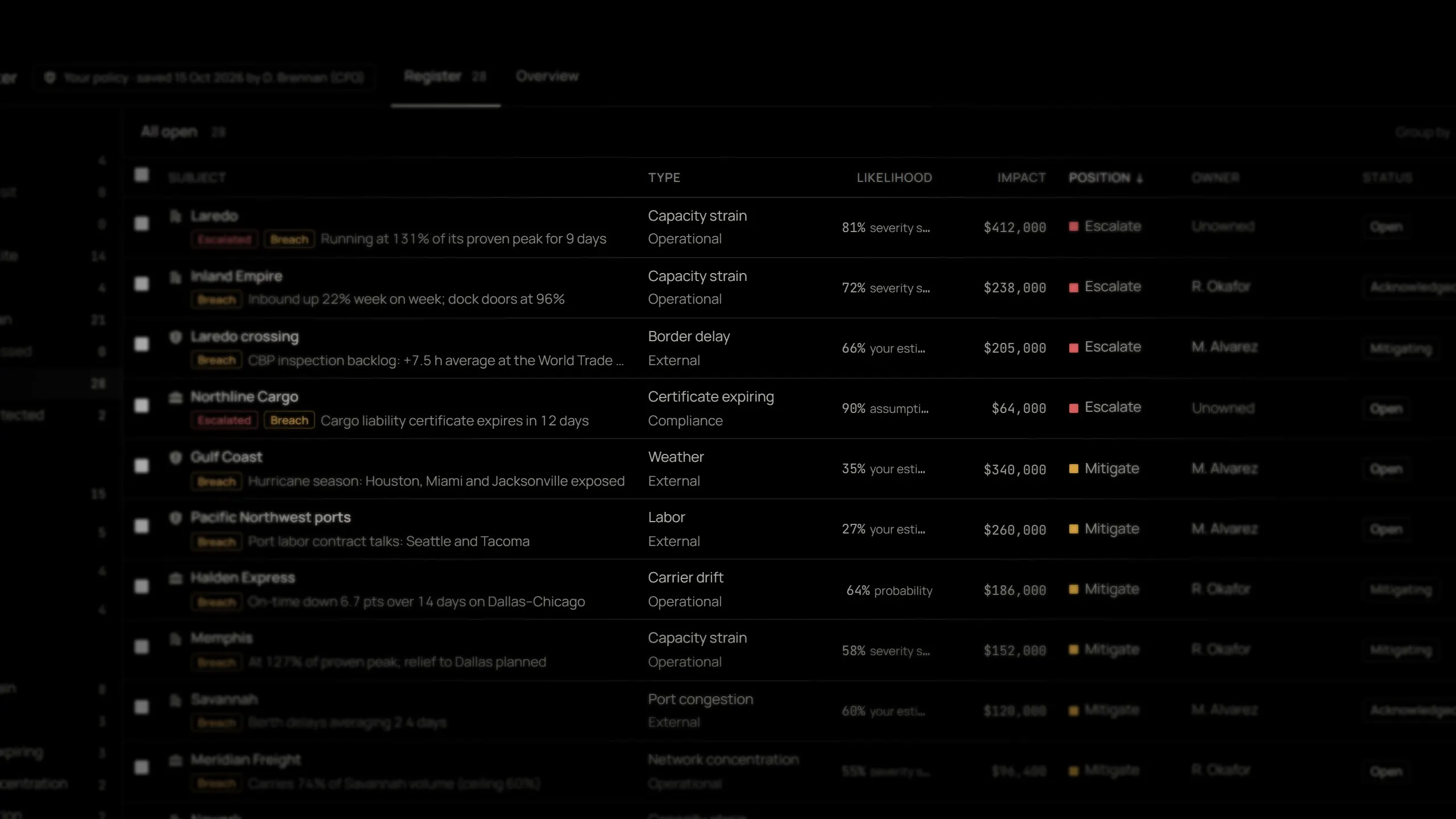
- 01 EscalateLaredo breaches the risk appetite and is routed to the person accountable for it.
- 02 OwnIt is acknowledged, assigned and given a dated treatment plan, and the trail records each step.
- 03 OverseeExposure, the severity and likelihood matrix and every breach, for the risk committee.
- 04 AssureCertificates and policies coming due, and the full register as a board-ready report.
Two questions
What tells you today?
When a refrigerated route starts running late, does anything tell you which receiving windows it will miss, and which loads will be refused?
Terra does. It sees the delay forming, from the stop that runs long every Tuesday to the reefer unit losing ground, and names the change while the route can still make the window.
When a customer's auditor asks for the temperature record behind a load, could you produce it the same day, with every reading, door event and handoff?
Vigil does. It keeps every reading, door event and handoff with the load and its lot codes, so the record is already assembled, and every figure traces to its source.
The gap
The reefer log knows the temperature. Not what the delay is about to do to it.
A route running forty minutes late into a DC with a two-hour receiving window. A reefer unit recovering a little slower after every door opening. Readings in one portal, receiving windows in another, lot codes on paper. So the first sign is a refused load, a short, or an auditor asking for a record that takes a week to assemble.
What each one flags
In your words, before it costs you.
Terra, for the routes
Late routes.
The stop that runs long every week and the traffic on the way, read forward to the time the route will really reach each door.
Receiving windows.
Every DC appointment against the route's projected arrival, so a missed window shows before the truck leaves the yard.
Shorts.
Orders picked against what is actually on hand, so a short shows as data at the dock, not as a deduction on the invoice.
Vigil, for the record
Temperature excursions.
Readings against each product's limits, with the units recovering slower each week seen before they fail.
An evidence trail.
Every reading, door event, trailer swap and handoff kept with the load, ready for a customer audit or a claim.
Traceability.
Lot codes tied to the routes, trailers and readings they travelled with, so a traceability request is answered from the record.
A worked example
One route. One trailer. One receiving window.
An illustrative operation, not a customer account. The figures are realistic, not real.
- What Terra read
- Ninety days from a regional food distributor: 5,900 refrigerated deliveries on 38 routes, with planned and actual arrival times, each DC's receiving window, reefer readings every five minutes and door-open events.
- The signal
- Route 14's reefer unit is holding its 34°F setpoint less well each week: return air takes longer to recover after every door opening. And the route's third stop has run longer every Tuesday for a month.
- What it reaches
- On Tuesday the route reaches its last stop, a grocery DC with a 6:00 to 8:00 receiving window, about fifty minutes late on this trend, with 22 pallets of dairy and fresh-cut produce. At the unit's current recovery rate, product passes 41°F for about half an hour on the way.
- What is at stake
- A refused load worth about $38,000, $3,000 in redelivery and a fill-rate miss on the customer's scorecard, $41,000 in all, and an excursion the customer's auditor will ask about.
- The move
- Terra: swap the third and fourth stops, and swap the trailer for one with a healthy unit before the route loads. The route reaches the DC inside its window, with no extra miles, and the unit goes for service.
- The record
- Vigil: the readings, the door events, the trailer swap and the reason for it are kept with the load and its lot codes. When the customer's auditor asks, the record is already assembled, and every figure traces to its source.
$41,000 at stake. Two stops and one trailer swapped, before the route loaded.
Works with what you run
Nothing to replace.
Your TMS plans the routes. Your reefer telematics and loggers record the temperatures. Your WMS runs the dock. Terra and Vigil work across what they produce, and across your customers' EDI, to see what they mean together. Exports and spreadsheets work as readily as APIs.
Reads from
- TMS and routing
- Reefer telematics
- Temperature loggers
- WMS
- EDI
- Spreadsheets and exports
How to start
See it on your routes.
Show us where the operation breaks down. We build Terra and Vigil around the systems you already run, show you what they see on your own routes and readings, and you compare it with what you run today.
- You bring
- Delivery history plus temperature logs: routes, stops, planned and actual arrival times, and the readings from your reefer units or loggers. Exports are fine.
- We bring
- Terra and Vigil, built around your data, your systems and how you actually operate, and a walkthrough of what they see on your own routes, trailers and readings.
- Cost
- There's no cost while we work with you, for the foreseeable future. You see what the software does on your own operation before it costs you anything.
- Then
- Terms are agreed only once you have seen what the software does on your operation. They are sized to what you run, not to us, and nothing becomes a contract until you agree to it.
Your data
- Used only for your operation. It is never shared with, or used for, anyone else.
- No third-party models. Your data is never sent to an outside model provider.
- An NDA first, before you send anything, if you want one.
- Where it is processed is named before any data moves, and access is limited to the people working on your operation.
- Deleted on request.
Questions
What operators ask first.
Do I need both Terra and Vigil?
No. Start with the product that fits the problem in front of you. Terra if the trouble is late routes and refused loads, Vigil if it is the temperature record and the audit. Both run on the same model of the operation, so the other can follow when it has earned it.
Do we have to replace our TMS or our reefer telematics?
No. They do their jobs. Terra and Vigil work across what they produce, and nothing you depend on is touched.
What do you need from me?
The problem, someone who knows how the operation runs, and the delivery history and temperature logs around it. Exports or a spreadsheet are enough to start. Imperfect data is fine.
Is this built for an operation my size?
Yes. We build around the operation in front of us, at whatever size it is, and it costs nothing while we work together.
What does it cost?
Nothing while we work with you, for the foreseeable future. You see what the software does on your own operation first. When it has shown its value there, we agree terms with you, sized to what you run, and nothing becomes a contract until you agree to it.
Why is there no cost?
Because the software is best judged on your own operation, not on our word. It isn't a trial or a pilot: you see what it does on your own data first, and when it has shown its value there, we agree terms with you.
What does it cost once the software has shown its value?
Terms are agreed only after you have seen what the software does on your own operation. They are sized to what you run: how much of the operation the software covers, the volume and the number of sites, not the size of Theralon. You start with the product that fits the problem in front of you and add the rest when it has earned it. Nothing becomes a paid contract until you agree to it. The same software runs owner-led operations and large ones alike.
Who sees my data?
Only the people working on your operation. It is never shared with or used for anyone else, never sent to a third-party model, covered by an NDA if you want one, and deleted on request.
Find your operation
Theralon, on other operations.
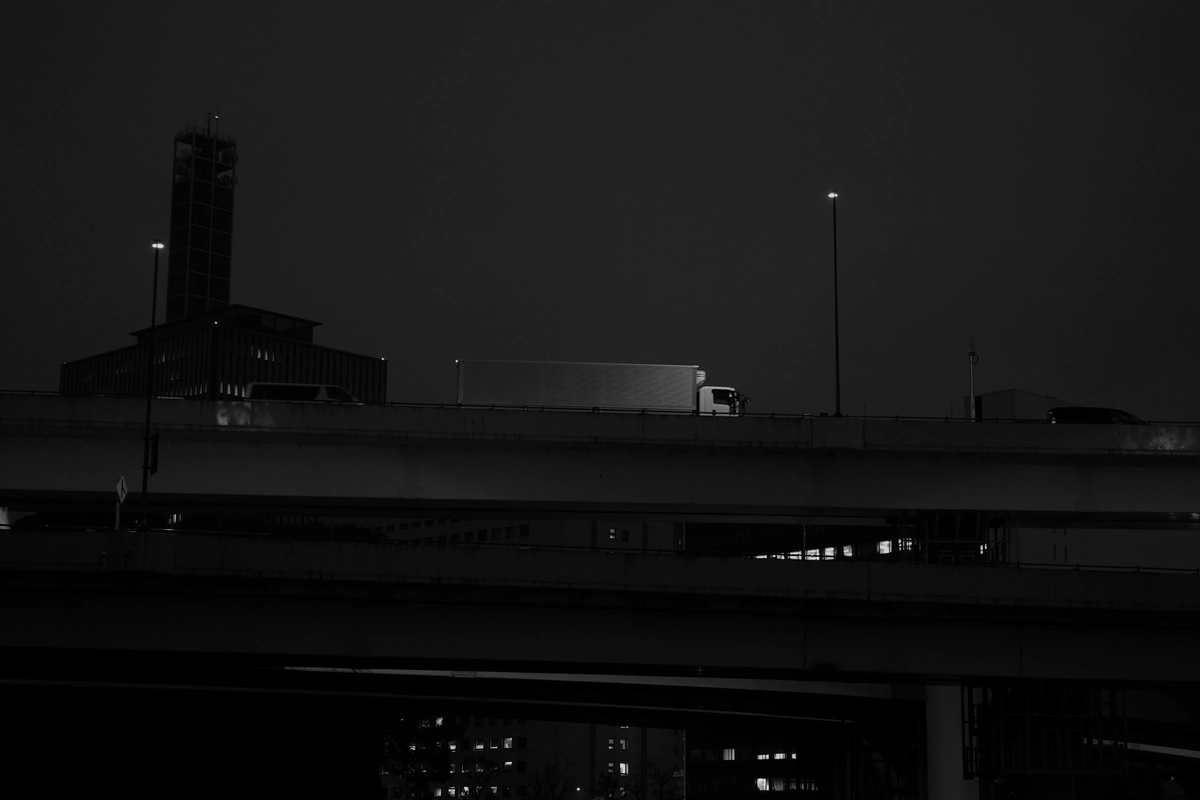 Freight, 3PL and truckingBefore the next load misses.Brokers, 3PLs, warehouses, carriers and fleets.
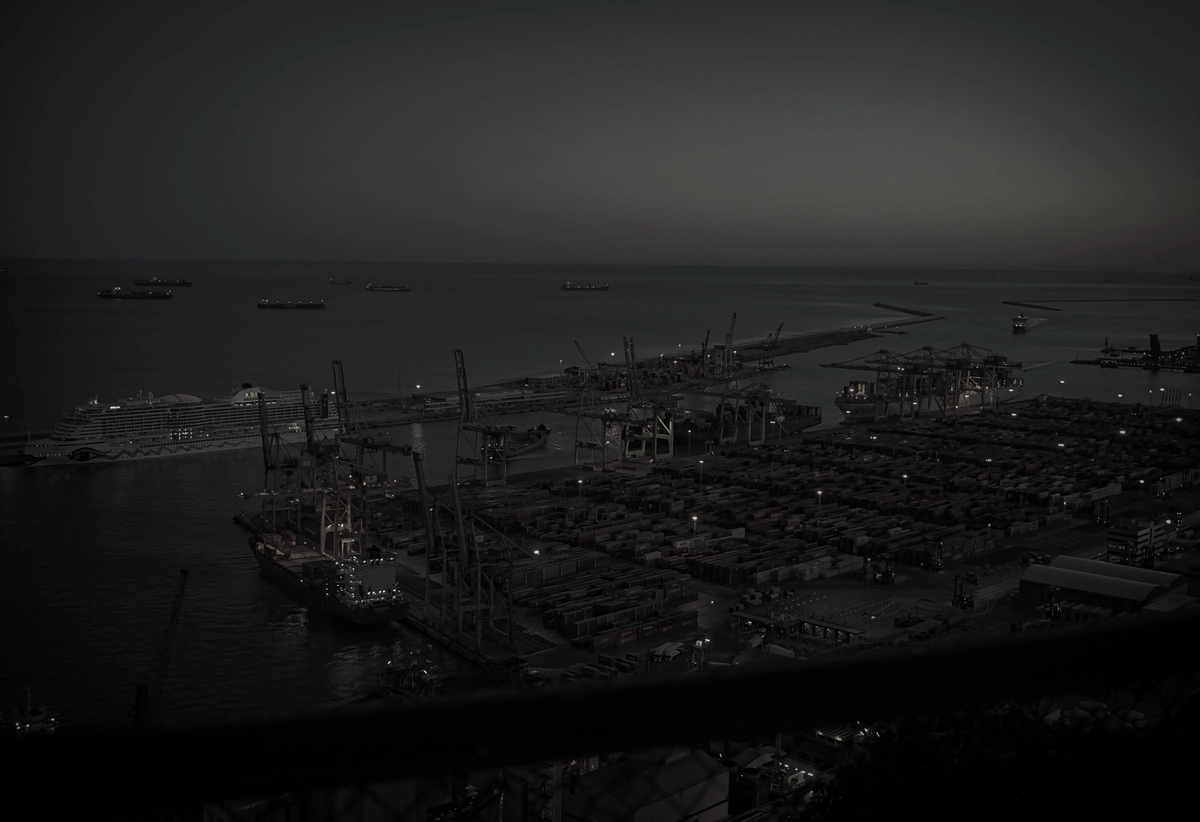 Intermodal, transload and river terminalsBefore the clock starts.Railcars, barges, berths, gangs and drays.
 Short line and regional railBefore the car hire builds.Interchange, free time, car hire and demurrage.
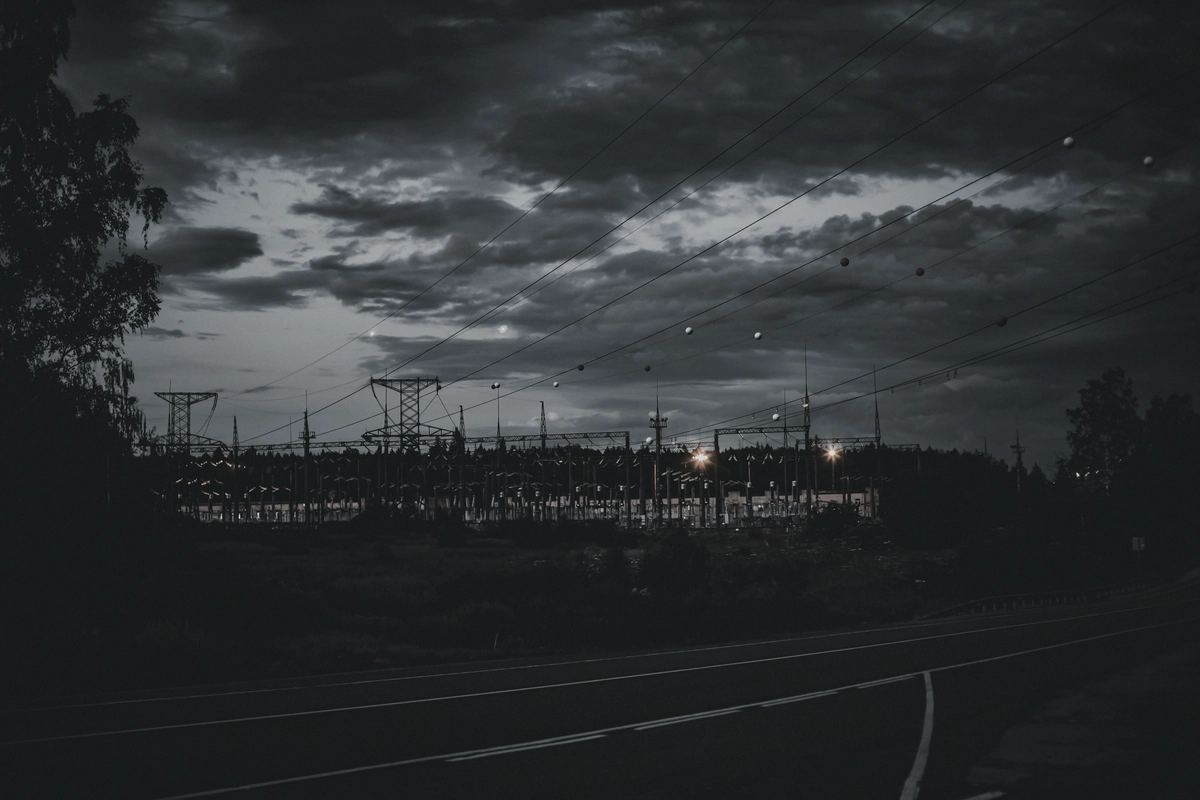 Fuel and propaneBefore the tank runs out.Tank levels and degree days against the routes.
Before the load is refused
See it on your routes.
Show us where the operation breaks down. We build around the systems you already run. Then compare it with what you run today.
Get in touch →