Library — Critical logistics
When the supply chain is the mission
For some operations a late part or a missed delivery is not a cost. It decides whether the operation happens at all.
01The problem
In most supply chains a disruption costs money. In some, it costs the operation.
Where a single component can take an asset out of service, where a supply route can close without warning, and where demand rises exactly when conditions are hardest, the question stops being how efficiently goods move. It becomes whether the right thing will be in the right place at the moment it is needed.
Operations like these usually run on the same fragmented estate as everyone else — inventory in one system, maintenance in another, transport in a third, supplier status in email. The picture of readiness is assembled by hand, which means it is always slightly out of date and never quite the same twice.
Readiness is not a report. It is the current state of a network, and it changes every hour.
02Where Theralon applies
- 01
Readiness as a live picture
Stock, asset condition, maintenance backlog and inbound supply read together, so availability is known now rather than reconstructed for the next review.
- 02
Critical spares and long lead times
The components whose absence would stop an asset, how long each takes to replace, and where alternative supply exists — surfaced before the shortfall is felt.
- 03
Routes that can close
Which movements depend on a single route, hub or carrier, and what reaches the end of the chain if that dependency fails.
- 04
Surge
What a sudden rise in demand does to stock, transport capacity and maintenance throughput across the whole network, not one location at a time.
- 05
Dependencies below the surface
A requirement followed back through suppliers and sub-suppliers to the single source nobody had written down.
- 06
Decisions under time pressure
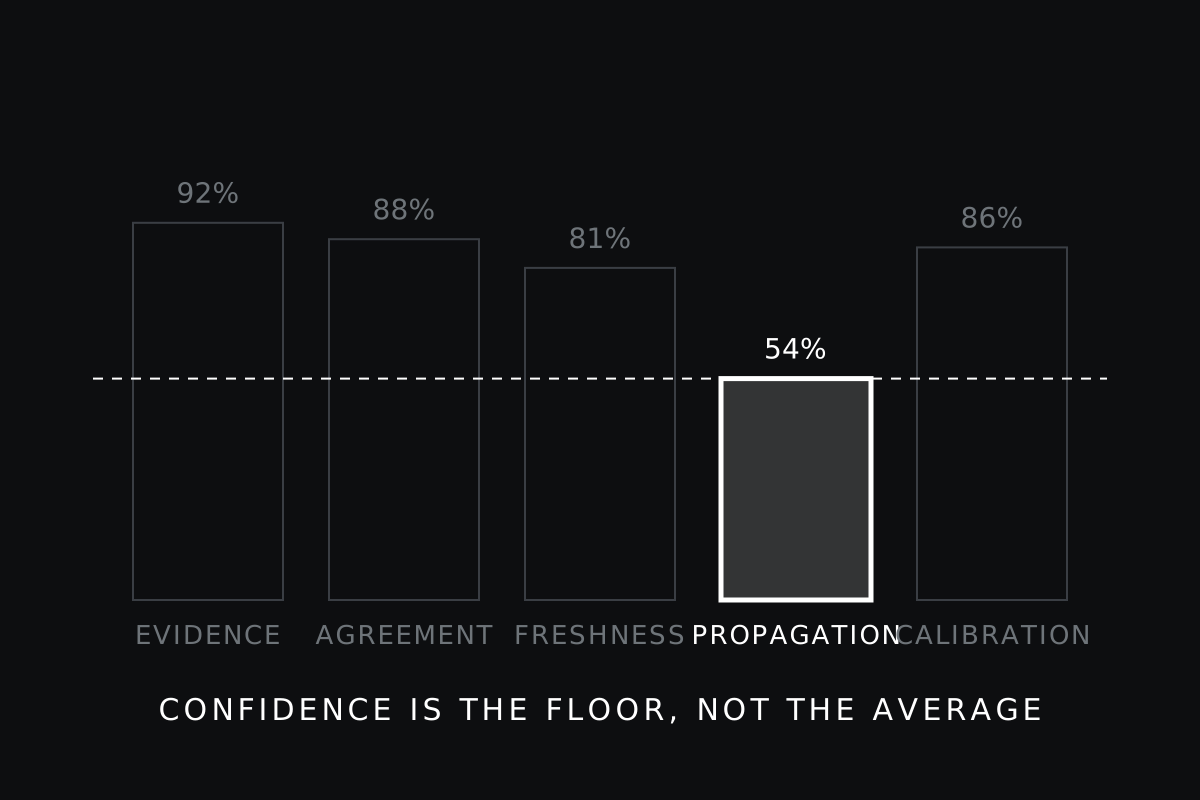
Recommendations weighed against the whole operation, each carrying its evidence and a stated confidence — so a fast decision is not a blind one.
03What changes
Readiness compiled for the meeting
Readiness read from the live network
Shortfalls found at the point of need
Shortfalls projected while stock can still move
Every route assumed open
Single points of failure named in advance
04Under the hood
Assets, parts, locations, routes, suppliers and movements are held in the Principia as connected objects, so a question such as what depends on this route is a traversal rather than a spreadsheet exercise. Propagation carries a disruption forward through timing and buffers; Exposure consolidates it into the few concentrations that genuinely matter. Every organisation’s model is held in strict isolation, and access within it is scoped per person.
If this is your operation, we would like to hear about it.
We reply personally. There is no sales queue.
Get in touch →