Terra — Short line and regional rail
Before the car hire builds.
Terra keeps one live model of every car, customer siding, interchange and crew across the systems you already run. It sees interchange slipping, cars about to sit past free time and foreign cars running up car hire, and names the move that matters now.
For short line and regional railroads. Your transportation system does its job. Terra works across what it produces.
In the Command center
Watch it work.
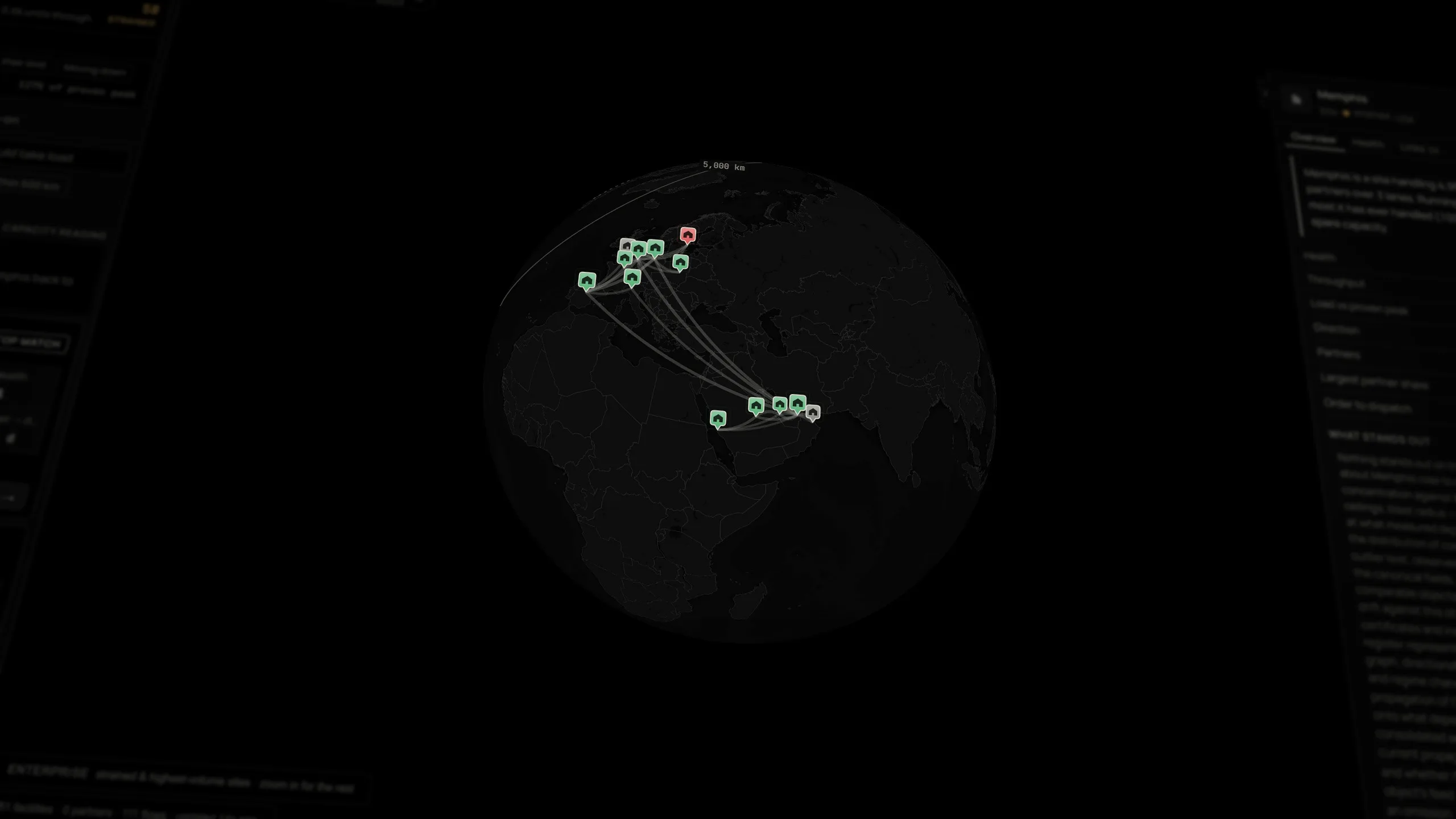
- 01 SeeMemphis is running over capacity, and the map shows it in its place in the network.
- 02 RelieveTerra ranks the sites with room to spare, by distance and spare capacity a day.
- 03 PlanThe move is planned with its volume, duration and handling guidance.
- 04 SearchOne question returns the late shipments behind it, record by record.
Two questions
What tells you today?
When a customer's cars start sitting at the siding, does anything tell you before the demurrage bill is disputed?
Terra does. It reads every car's placement and release against the switch schedule and free time, and shows which cars will sit, why, and whose delay it was.
If interchange ran a day late for a week, could you see today what it would cost you in car hire?
Terra does. It runs that week before it happens: the cars that miss their switch, the foreign cars held on line, the car hire that follows, and which switch to move first.
The gap
The car location message says where the car is. Not who will pay for the time it sits.
Cars held at a customer siding because the next switch is two days out. Interchange arriving a little later every week. Foreign cars on line long enough to run up car hire. Each fact sits in a different place, the car location messages, the switch lists, the demurrage spreadsheet, so the first sign is usually a car hire statement, or a customer disputing a demurrage bill.
What Terra flags
In your words, before it costs you.
Interchange slipping.
The connecting railroad's arrivals, read as a trend, so the train that will start missing its switch shows weeks ahead.
Cars about to sit.
Every car's free time against the next switch to its siding, ranked by the days it will run.
Car hire building.
Foreign cars on line, by the hour, with the moves that would send them home soonest.
Demurrage you can defend.
Placement and release times reconciled across your records and the location messages, so each charge goes out with its evidence.
A worked example
One interchange. One switch. Five weeks.
An illustrative operation, not a customer account. The figures are realistic, not real.
- What Terra read
- Ninety days of car events from a regional railroad: 9,800 car movements across 22 customers and two interchanges, with car location messages, switch lists, the demurrage bills sent and the car hire statements received.
- The signal
- Interchange from one connecting railroad has arrived about forty minutes later each week for five weeks. The Thursday train now misses the Friday morning switch to the industrial park.
- What it reaches
- Cars that miss Friday's switch wait until Monday. On this trend, about 26 foreign cars a week sit three extra days on line, and 14 of them are loads for one plastics customer whose free time runs out over the weekend.
- What is at stake
- About $2,300 a week in car hire, $9,400 over the month the trend is projected to run, and a demurrage dispute with the railroad's largest customer, who will rightly say the delay was not theirs.
- The move
- Move the industrial park switch from Friday morning to Friday afternoon, after the Thursday train is in, until interchange recovers. Raise the trend with the connecting railroad, with five weeks of times attached. Projected extra car-days fall from 78 a week to 6, for one crew start moved by six hours.
- What follows
- The decision is kept with its evidence. When interchange recovers, the switch moves back, and the record of the connecting railroad's times carries into the next conversation with it.
$9,400 in car hire at stake. One switch moved by six hours.
Works with what you run
Nothing to replace.
Your transportation system runs the cars. The connecting railroads send their location messages. Your crews work from switch lists. Terra works across what they all produce, to see what they mean together. Exports, spreadsheets and EDI work as readily as APIs.
Reads from
- Transportation or yard system
- Car location messages
- Switch lists
- Waybills and EDI
- Demurrage and car hire statements
- Spreadsheets and exports
How to start
See it on your railroad.
Show us where the operation breaks down. We build Terra around the systems you already run, show you what it sees on your own cars and interchanges, and you compare it with what you run today.
- You bring
- Car event history, switch lists, and the demurrage and car hire statements that followed. Exports or spreadsheets are fine.
- We bring
- Terra, built around your data, your systems and how you actually operate, and a walkthrough of what it sees on your own cars, customers and interchanges.
- Cost
- There's no cost while we work with you, for the foreseeable future. You see what the software does on your own operation before it costs you anything.
- Then
- Terms are agreed only once you have seen what the software does on your operation. They are sized to what you run, not to us, and nothing becomes a contract until you agree to it.
Your data
- Used only for your operation. It is never shared with, or used for, anyone else.
- No third-party models. Your data is never sent to an outside model provider.
- An NDA first, before you send anything, if you want one.
- Where it is processed is named before any data moves, and access is limited to the people working on your operation.
- Deleted on request.
Questions
What operators ask first.
Do we have to replace our transportation system?
No. It does its job. Terra works across what it and the location messages produce, and nothing you depend on is touched.
What do you need from me?
The problem, someone who knows how the railroad runs, and the car events around it, with the demurrage and car hire statements that followed. Exports or a spreadsheet are enough to start. Imperfect data is fine.
Is this built for an operation my size?
Yes. We build around the operation in front of us, at whatever size it is, and it costs nothing while we work together.
What does it cost?
Nothing while we work with you, for the foreseeable future. You see what the software does on your own operation first. When it has shown its value there, we agree terms with you, sized to what you run, and nothing becomes a contract until you agree to it.
Why is there no cost?
Because the software is best judged on your own operation, not on our word. It isn't a trial or a pilot: you see what it does on your own data first, and when it has shown its value there, we agree terms with you.
What does it cost once the software has shown its value?
Terms are agreed only after you have seen what the software does on your own operation. They are sized to what you run: how much of the operation the software covers, the volume and the number of sites, not the size of Theralon. You start with the product that fits the problem in front of you and add the rest when it has earned it. Nothing becomes a paid contract until you agree to it. The same software runs owner-led operations and large ones alike.
Who sees my data?
Only the people working on your operation. It is never shared with or used for anyone else, never sent to a third-party model, covered by an NDA if you want one, and deleted on request.
Find your operation
Theralon, on other operations.
 Freight, 3PL and truckingBefore the next load misses.Brokers, 3PLs, warehouses, carriers and fleets.
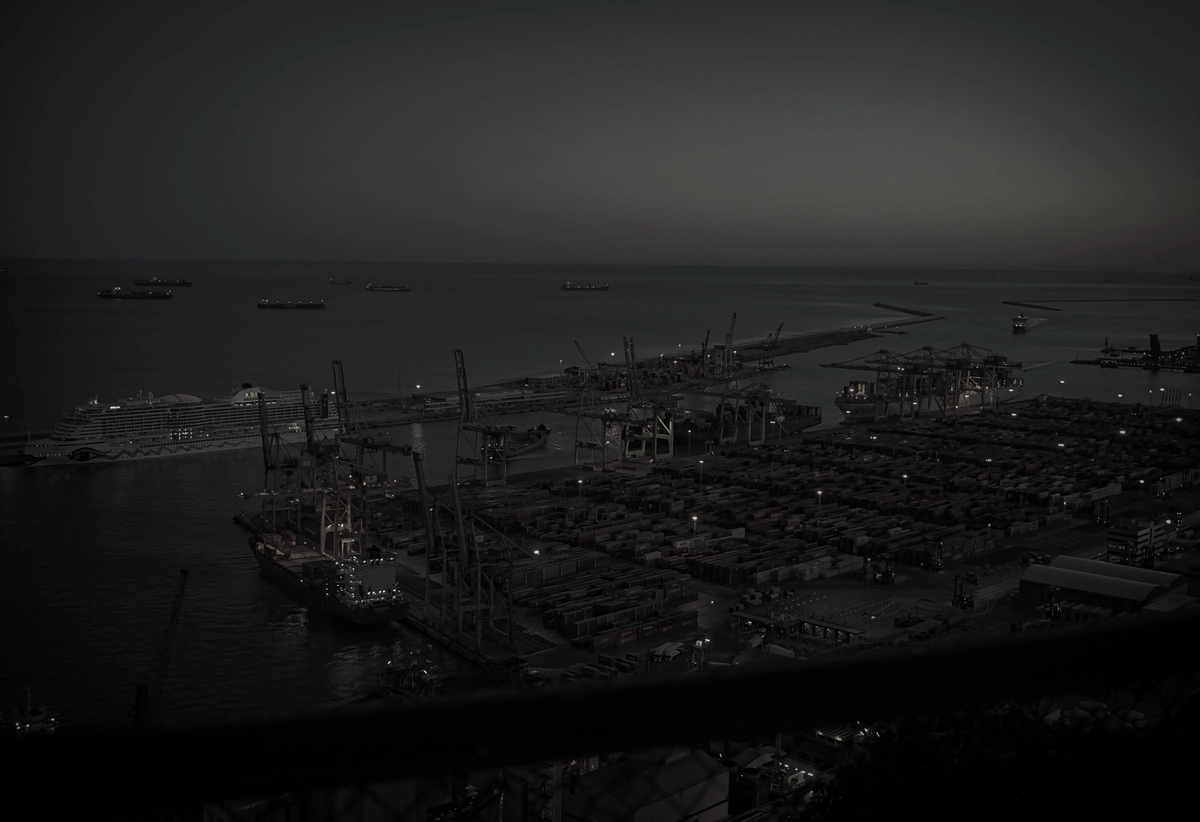 Intermodal, transload and river terminalsBefore the clock starts.Railcars, barges, berths, gangs and drays.
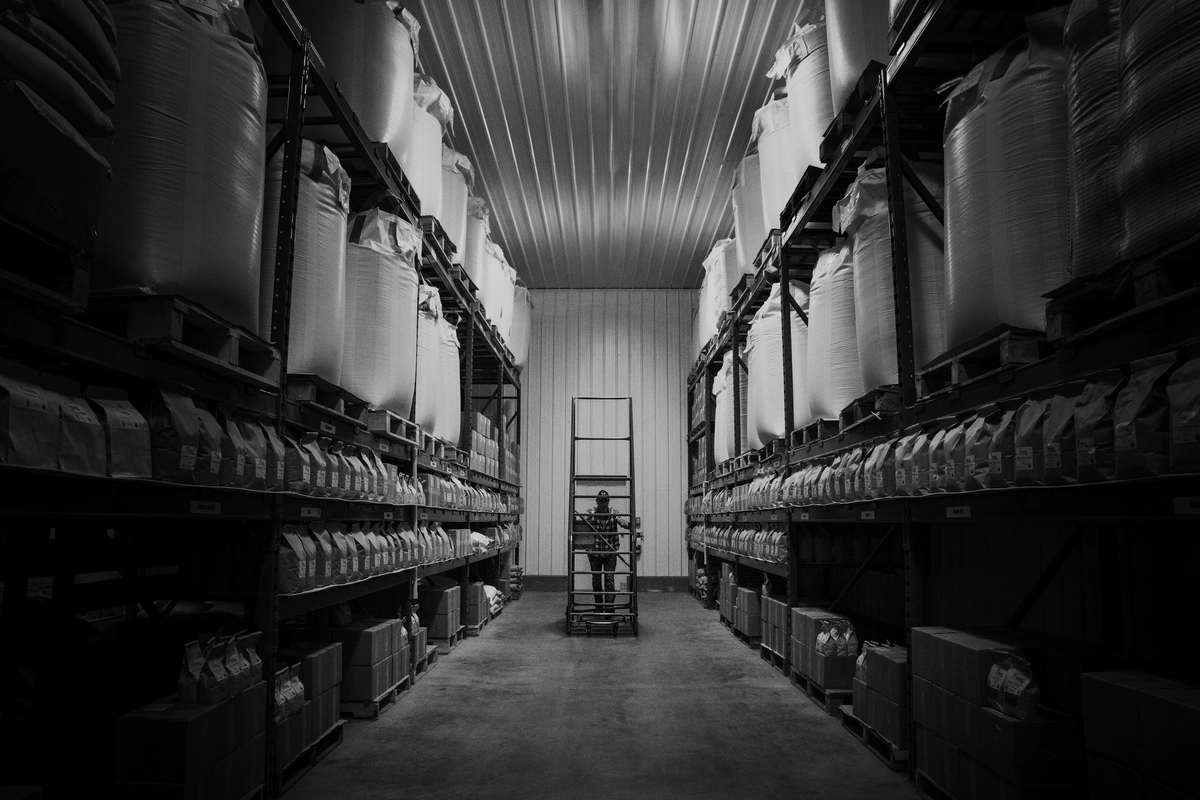 Cold chainBefore the load is refused.Late routes, receiving windows and the temperature record.
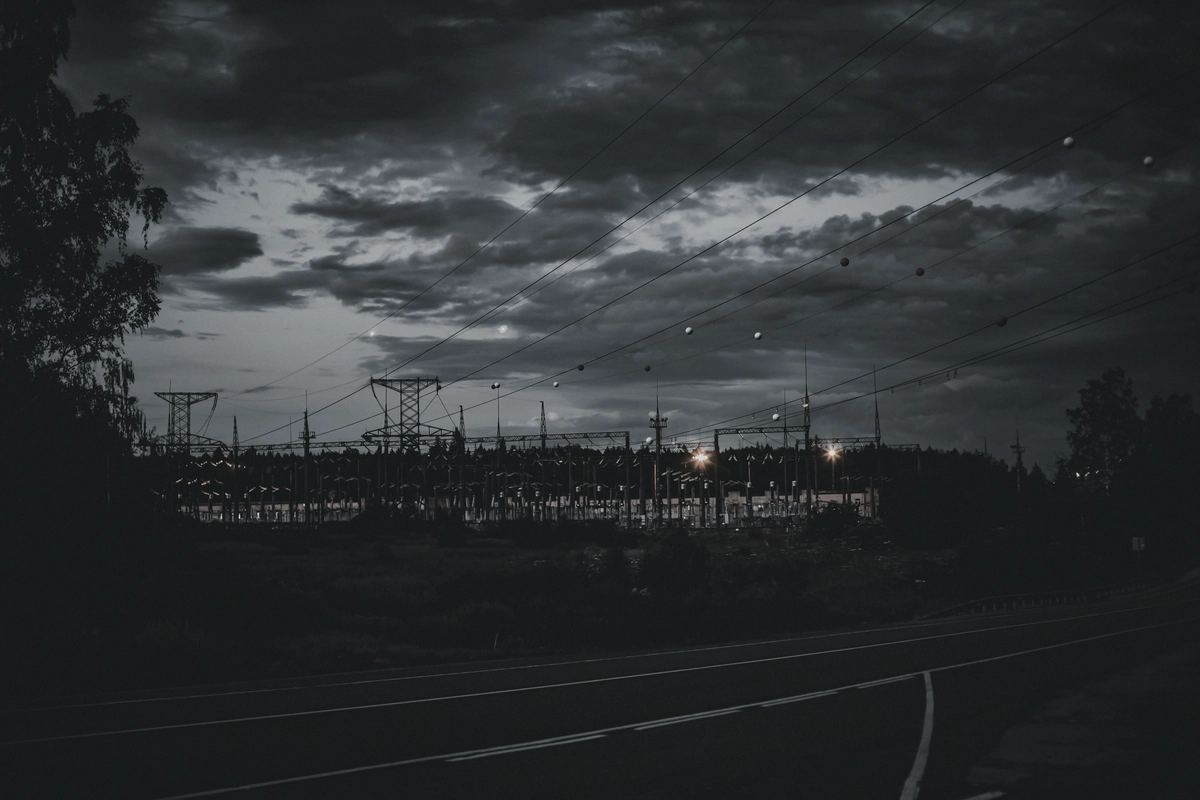 Fuel and propaneBefore the tank runs out.Tank levels and degree days against the routes.
Before the car hire builds
See it on your railroad.
Show us where the operation breaks down. We build around the systems you already run. Then compare it with what you run today.
Get in touch →