Library — Direction
Where Theralon goes, and why
Theralon is not built for every problem. It is built for a particular kind of process — and that choice decides where it goes.
01The two tests
Two tests decide where Theralon goes.
The first is whether a process is load-bearing — whether enough else depends on it that making it faster and more correct does not stay contained, but moves through everything built on top of it. The second is whether it is under-built — still running on inherited process and hand-carried certainty rather than being treated as an engineering problem worth solving.
Processes that pass both tests are rare, and they are rarely glamorous. They sit in logistics, in industrial supply, in the upkeep of critical assets and in the infrastructure everything else assumes will simply work.
The tests rule out a great deal. A process that matters but is already well served — financial reporting, customer management, most of what happens inside an office — fails the second. A process that is badly served but self-contained, where improving it changes nothing beyond itself, fails the first. Neither is a bad business. Neither is where Theralon is most useful.
What passes both is the kind of process where an hour saved in one place returns many hours elsewhere: a port handoff that holds up a hundred onward deliveries, a sub-tier supplier that a dozen product lines quietly share, a maintenance decision that sets a fleet’s availability for a month. In those places the distance between what an operation knows and what it could know is widest — and closing it pays out across everything that depends on it.
Thin coverage is not a gap in the market. It is a debt owed to everyone standing behind it.
02Where that points
- 01
Logistics and freight
Networks where one late connection reaches customers, production and cash.
Read the piece → - 02
Ports and maritime
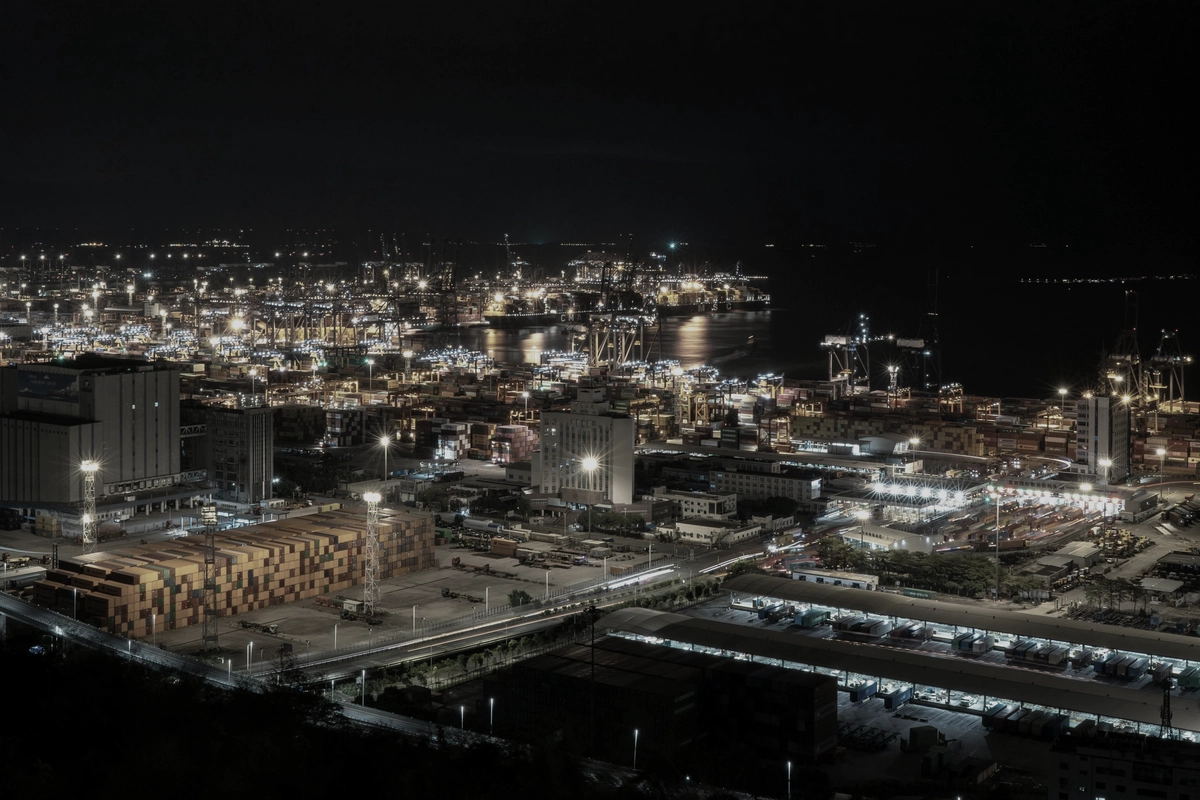
The handoffs where cargo waits for information rather than cranes.
Read the piece → - 03
Critical supply
Operations where a missed delivery is not a cost but a failure of the operation itself.
Read the piece → - 04
The industrial base
The sub-tier dependencies that production quietly rests on.
Read the piece → - 05
Fleets and critical assets
Availability decided by maintenance and parts long before the schedule.
Read the piece → - 06
Infrastructure
Ageing assets whose warnings are spread across too many systems.
Read the piece →
03What they have in common
- Many systems, and no shared understanding
- Consequences that travel far beyond the event
- A cost of delay that nobody has totalled
Where we start
We'd start with the problem in front of you.
Logistics, ports, critical supply, fleets and infrastructure are where Theralon goes first. Whichever you run, we start with the product that fits the problem and add the rest when it has earned it.
- Freight, terminals, cold chain, rail and fuel
- Start with the product that fits
- Add the rest when it has earned it
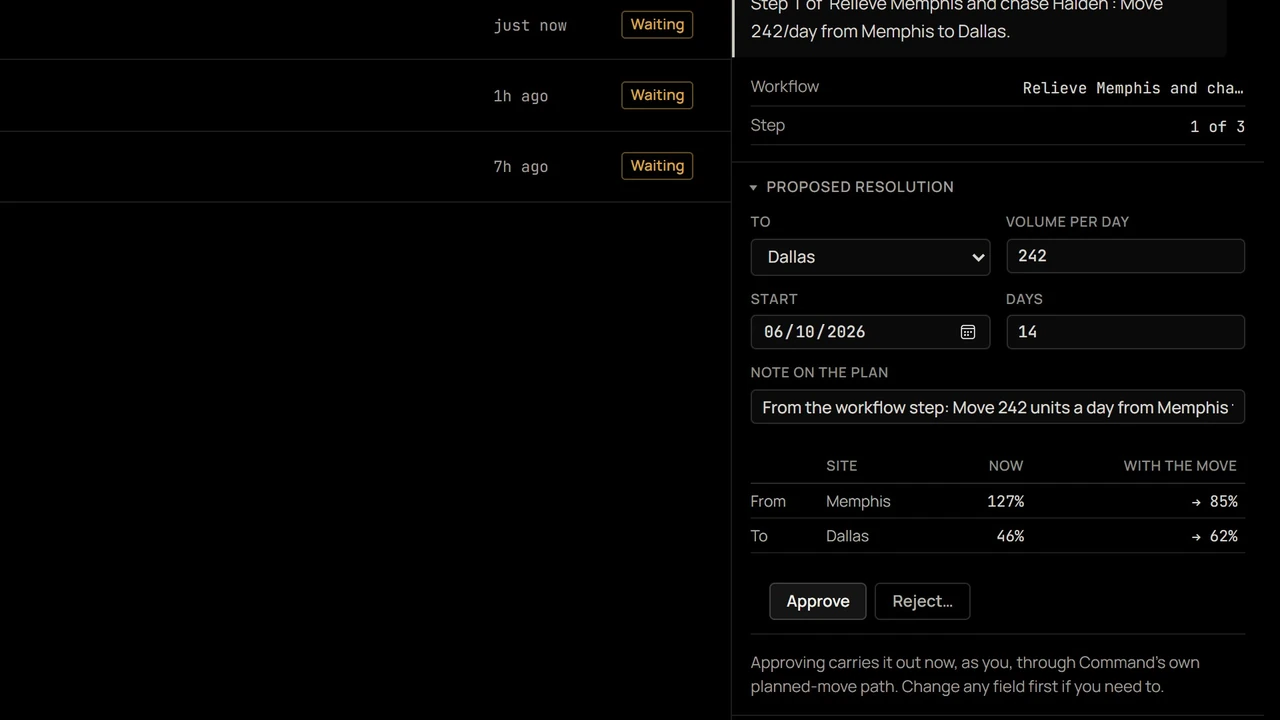
A screen from Scio, on synthetic data.
See it on your own operation.
Show us where the operation breaks down. We build around your data, your systems and how you actually operate, at whatever size the operation is. Then compare it with what you run today.
There's no cost while we work with you, for the foreseeable future. You see what the software does on your own operation before it costs you anything.
When it has shown its value there, we agree terms with you, sized to what you run, and nothing becomes a contract until you agree to it.