
Library — Origin
Starting with the part no one was racing to fix
Theralon did not begin with a product. It began with an observation about where the real delay in the economy sits, and who pays for it.
01The observation
The bottleneck is almost never physics.
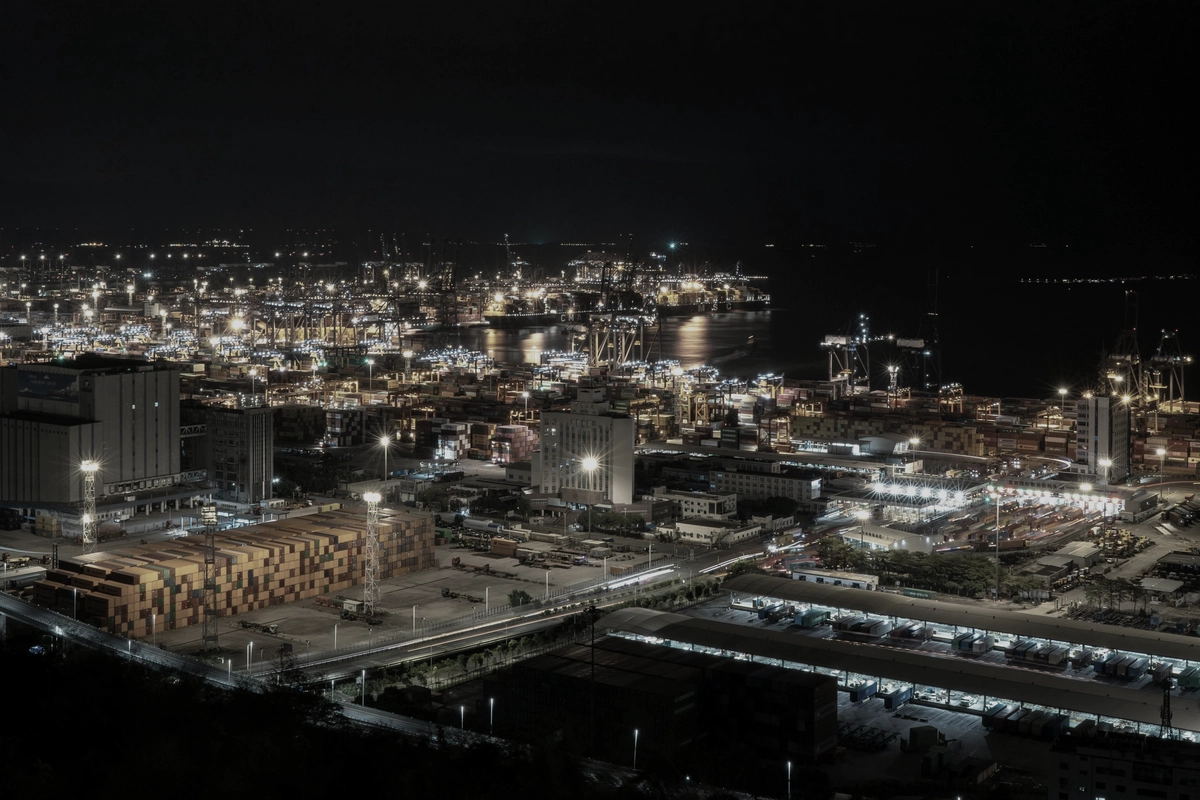
A shipment can cross an ocean in weeks, and the record confirming it arrived can still be waiting on reconciliation days later. A machine can report its own condition every second, and the decision to service it still waits for a scheduled review. Again and again, the slow part is informational — and it sits in the operational core of the economy, the processes that produce, move, verify and allocate physical things.
That core is where capital and attention are least likely to go. It does not demo well, and it has no dashboard anyone outside it ever sees. It stays as slow as the day it was built, because nothing about the way progress is rewarded has ever asked it to move faster.
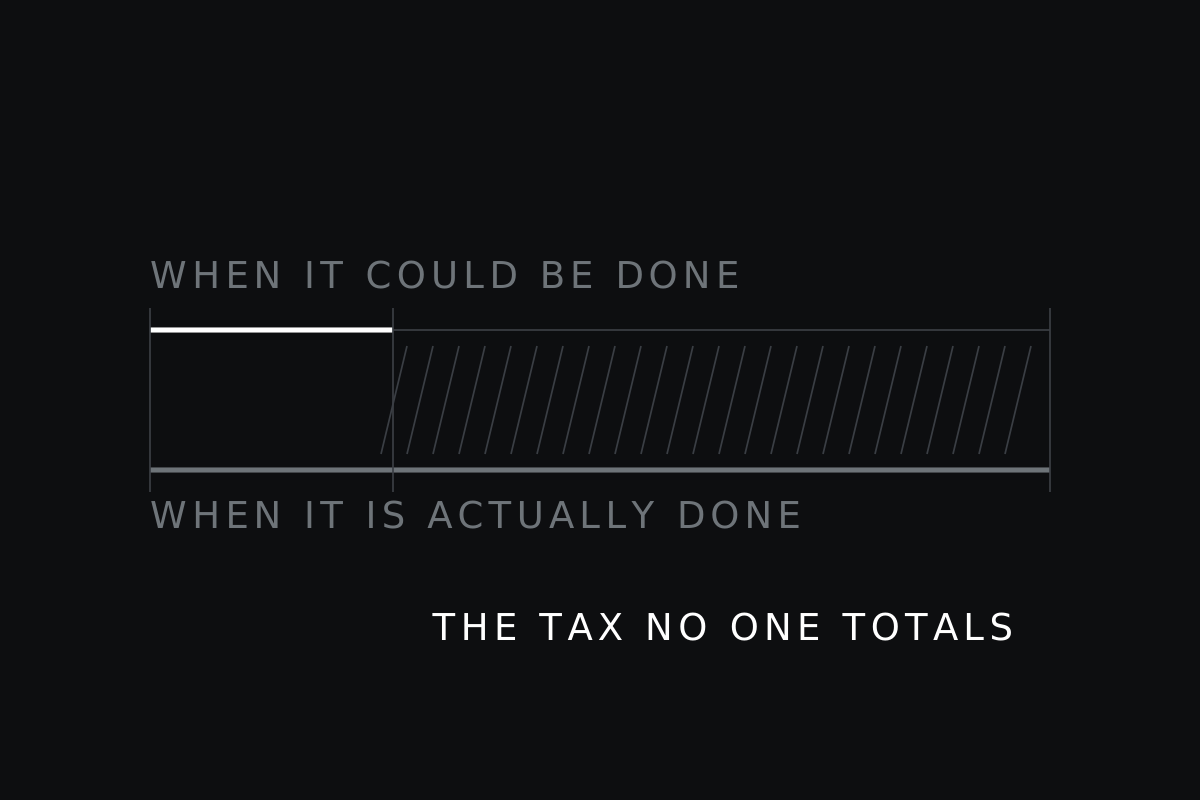
The cost of that slowness rarely appears as a line item. It shows up as buffer stock held against uncertainty, as expediting fees, as assets left idle while a decision waits for a meeting, and as skilled people whose working day goes on reassembling a picture that already existed in pieces. Each is treated as the normal cost of operating. Taken together, they are the price of processes that were never asked to move as fast as the reality underneath them.
Every day a process takes longer than the reality underneath it requires is a tax paid by someone who never sees the invoice.
02What followed from that
- 01
Total the bill
No single delay looks large enough to justify fixing. Added up across everything downstream, it stops being a rounding error and becomes a structural drag. The first decision was to count it.
- 02
Go where coverage is thin
Software already crowds the parts of the economy that are fast and visible. The opening was in processes that are load-bearing and under-built at once.
- 03
Refuse the false trade-off
Speed without correctness is a failure that arrives sooner. Whatever was built had to be as fast as the truth underneath it allowed, and no faster.
- 04
Build above, not instead
The systems of record already work. What was missing was a layer that understands what they mean together — so Theralon sits above them.
- 05
Make every figure answerable
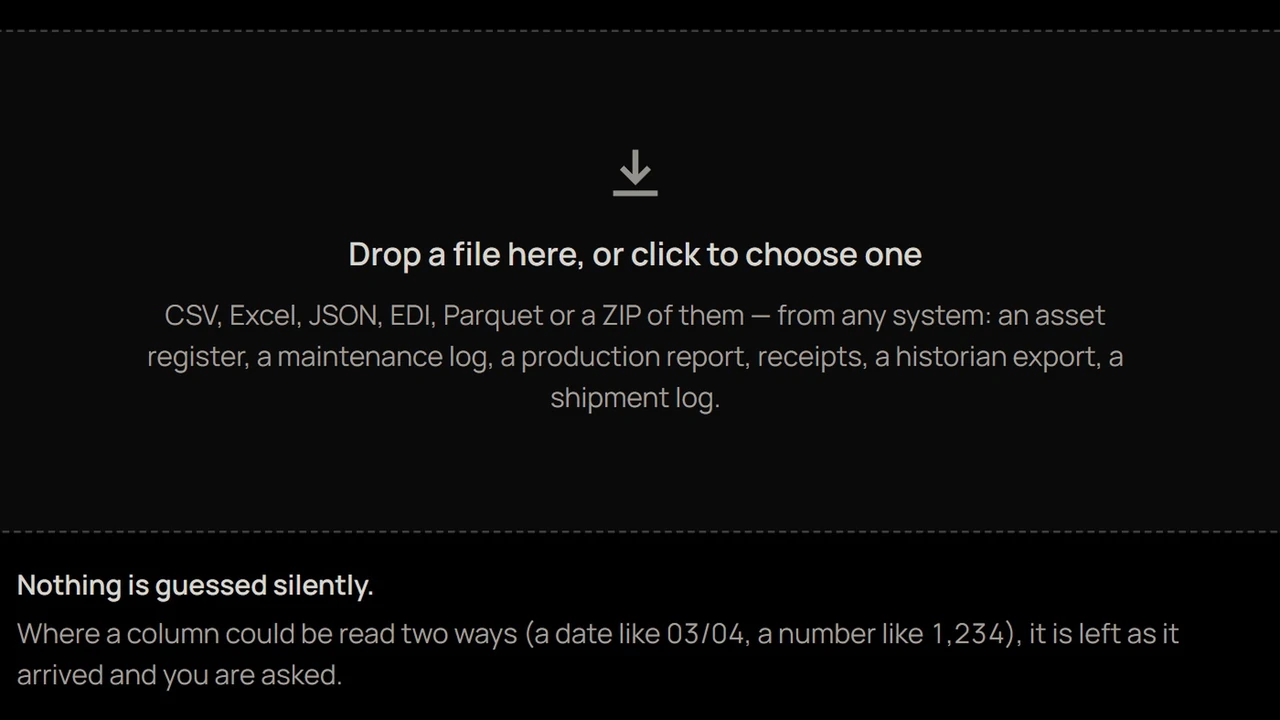
Nobody acts on a number they cannot question. Provenance, stated confidence and a record of what was believed and why became requirements, not features.
03The shift
Delay treated as normal
Delay counted as a cost
Software chasing the visible layer
Software pointed at the load-bearing core
Fast, or correct
Correct, and as fast as the truth allows
On your operation
We'd go where the coverage is thin.
The bottleneck is rarely physics. Show us where the operation breaks down, and we build above the systems you already run, with every figure answerable.
- Built above your systems, not instead of them
- Every figure traced to its source
- No trade-off between speed and evidence
A screen from Terra, on synthetic data.

Two questions
- Where does your operation still find out too late?
- Which decision does your team still make without the evidence in front of it?
See it on your own operation.
Show us where the operation breaks down. We build around your data, your systems and how you actually operate, at whatever size the operation is. Then compare it with what you run today.
There's no cost while we work with you, for the foreseeable future. You see what the software does on your own operation before it costs you anything.
When it has shown its value there, we agree terms with you, sized to what you run, and nothing becomes a contract until you agree to it.