Library — Integration
No rip and replace
Every operation already runs on decades of systems that work. The fastest way to make them smarter is to leave them where they are.
01The problem
Replacing an operational estate is slow, risky and rarely delivers the understanding it promised.
Large operations are built in layers — an ERP from one era, a warehouse system from another, maintenance software chosen by a different team, and EDI links to partners that nobody wants to touch. A replacement programme takes years, and at the end of it the new system is still one system.
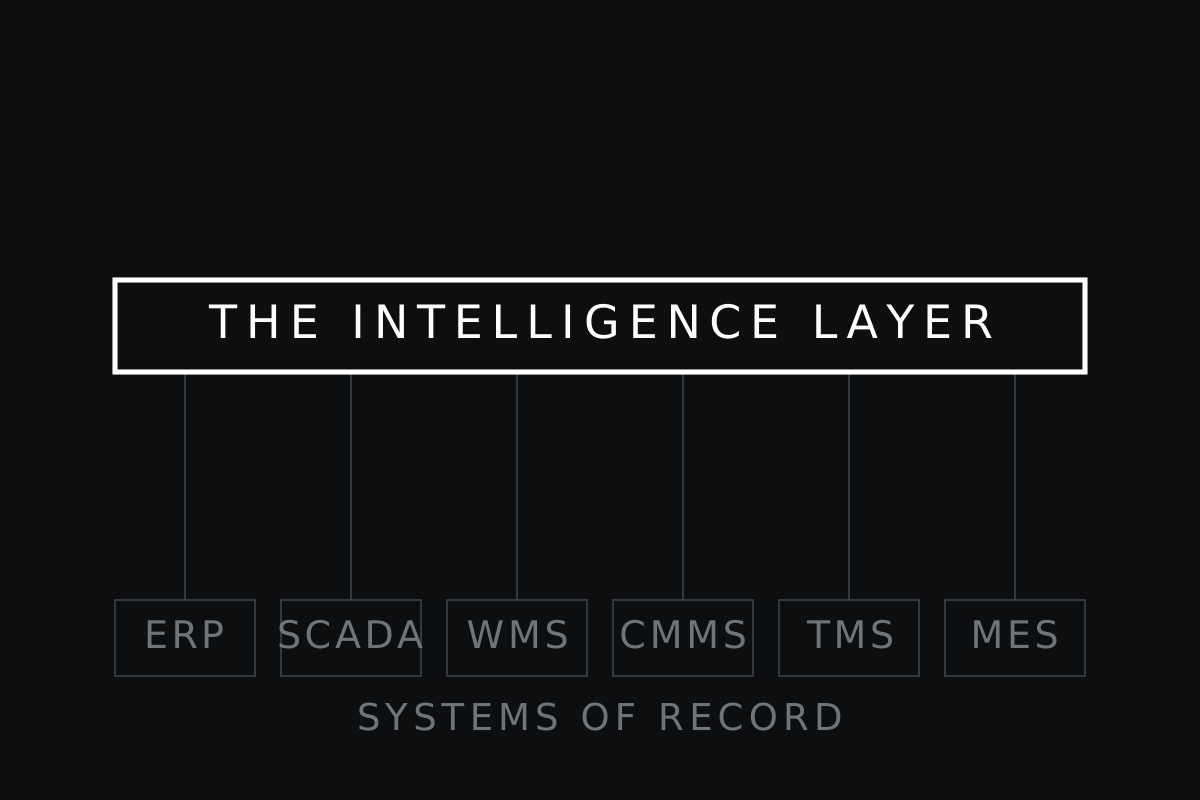
Theralon takes the opposite approach. It reads what those systems already produce and builds its understanding above them, so the value arrives without a migration and the systems of record stay exactly where they are.
The systems of record remain where they belong. The intelligence sits above them.
02How it plays out
An operator runs an ERP from one era, a warehouse system from another and a maintenance system chosen by a different team, with EDI links to dozens of partners that nobody wants to touch.
An illustrative sequence, not a customer account.
First
Theralon reads what those systems already produce — exports, event streams and EDI traffic — without changing any of them. Data nobody planned for, such as a carrier’s own dwell measure, is put to use rather than dropped.
Then
The model takes shape above the systems: sites, assets, suppliers, shipments and the relationships between them. An incomplete feed still contributes what it can rather than being discarded. Where two sources disagree, the conflict is kept and shown.
The first findings
Shipping notices reconciled against receipts surface a pattern of short deliveries from one partner that had been settled by phone for years. Condition trends from maintenance records start to inform the production plan.
What stays the same
The ERP, the warehouse system and the maintenance system carry on exactly as before. Nobody is retrained on a replacement, and nothing is migrated.
The understanding arrived without a migration, because nothing had to be torn out first.
On the systems you run
We'd start from the estate you already have.
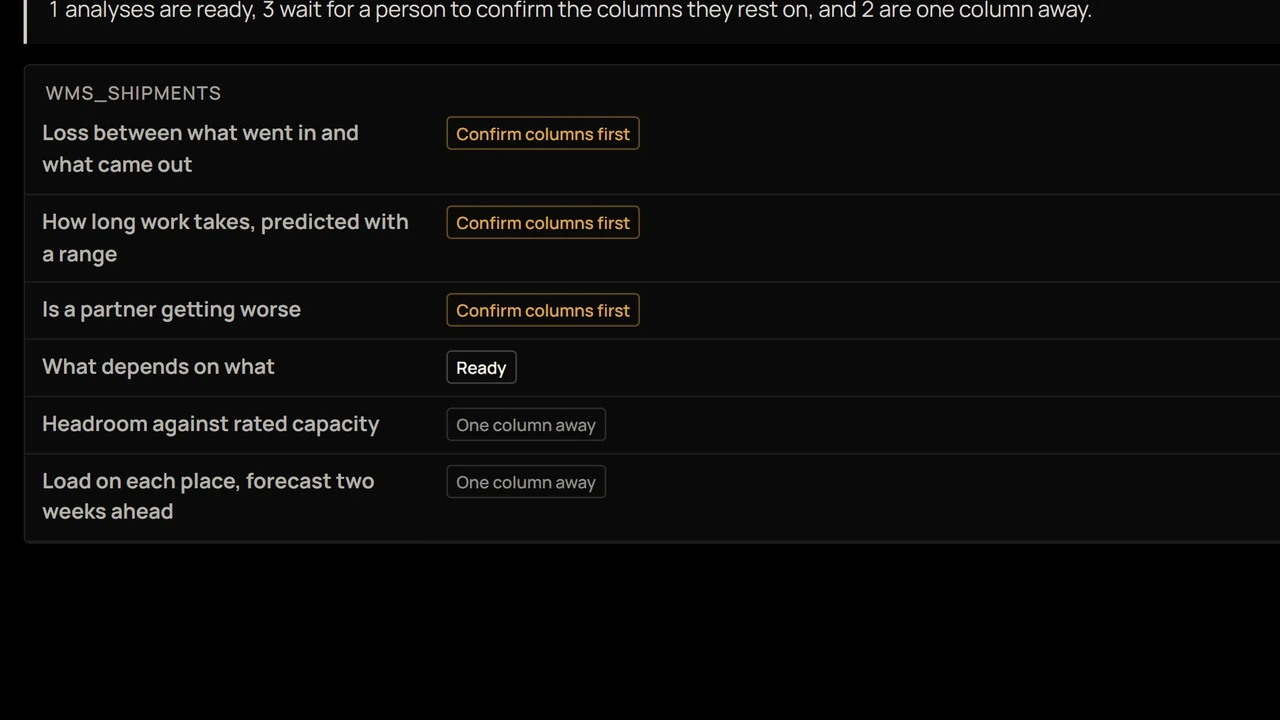
Terra reads your ERP, warehouse and maintenance systems and your partners' EDI as they are, incomplete feeds included, and builds one model of the operation above them. Nothing is migrated.
- Real EDI, not a sample
- Incomplete feeds still count
- Your operators can correct what it reads
A screen from Terra, on synthetic data.
03How it lands
- 01
Reads what already flows
ERP, EAM, MES, WMS, TMS, CMMS, SCADA, industrial IoT, operational databases, cloud data platforms, streaming infrastructure, APIs and live telemetry.
- 02
Real EDI, not a sample
Partner EDI traffic read alongside internal systems, so the model reflects what actually moved.
- 03
Nothing usable dropped
Data nobody planned for is put to use, not discarded for failing to match a known name.
- 04
Incomplete feeds still count
A source with gaps still contributes what it can, so partial data is never wasted.
- 05
Operators can correct it
The model can be corrected and extended directly, and every change keeps a record of who made it and where it came from.
- 06
Built to be built on
Structured, documented access lets integrators work directly with the model, the risk register and model cards.
04What changes
Value after the migration
Value without one
Data dropped for not fitting
Every usable field put to work
Integration by tribal knowledge
Integration against a documented model
05Under the hood
Every addition to the model, automated or made by an operator, is checked before it is accepted. Anything that does not fit is refused with an explanation — never stored as a fact indistinguishable from a real one.

Two questions
- Could you see your whole operation as one picture without replacing a system?
- Does anything read your partners' EDI as it actually arrives?
Terra does both. See it on your own operation.
Show us where the operation breaks down. We build around your data, your systems and how you actually operate, at whatever size the operation is. Then compare it with what you run today.
There's no cost while we work with you, for the foreseeable future. You see what the software does on your own operation before it costs you anything.
When it has shown its value there, we agree terms with you, sized to what you run, and nothing becomes a contract until you agree to it.